From 200 ideas to one funded venture
How SeAH Steel's search for a new business became Everguard, a worker-safety venture, over 13 months.
- CLIENT
- SeAH Steel
- CONTEXT
- While at BCG Digital Ventures, 2018 to 2019
- MY ROLE
- Strategic designer, from innovation through incubation
- OUTCOME
- Launched in 2019, still operating
Visit Everguard →
SeAH set out to build its next business beyond core steel. Its leadership chose to start with evidence: research across the whole value chain before committing to any one idea.
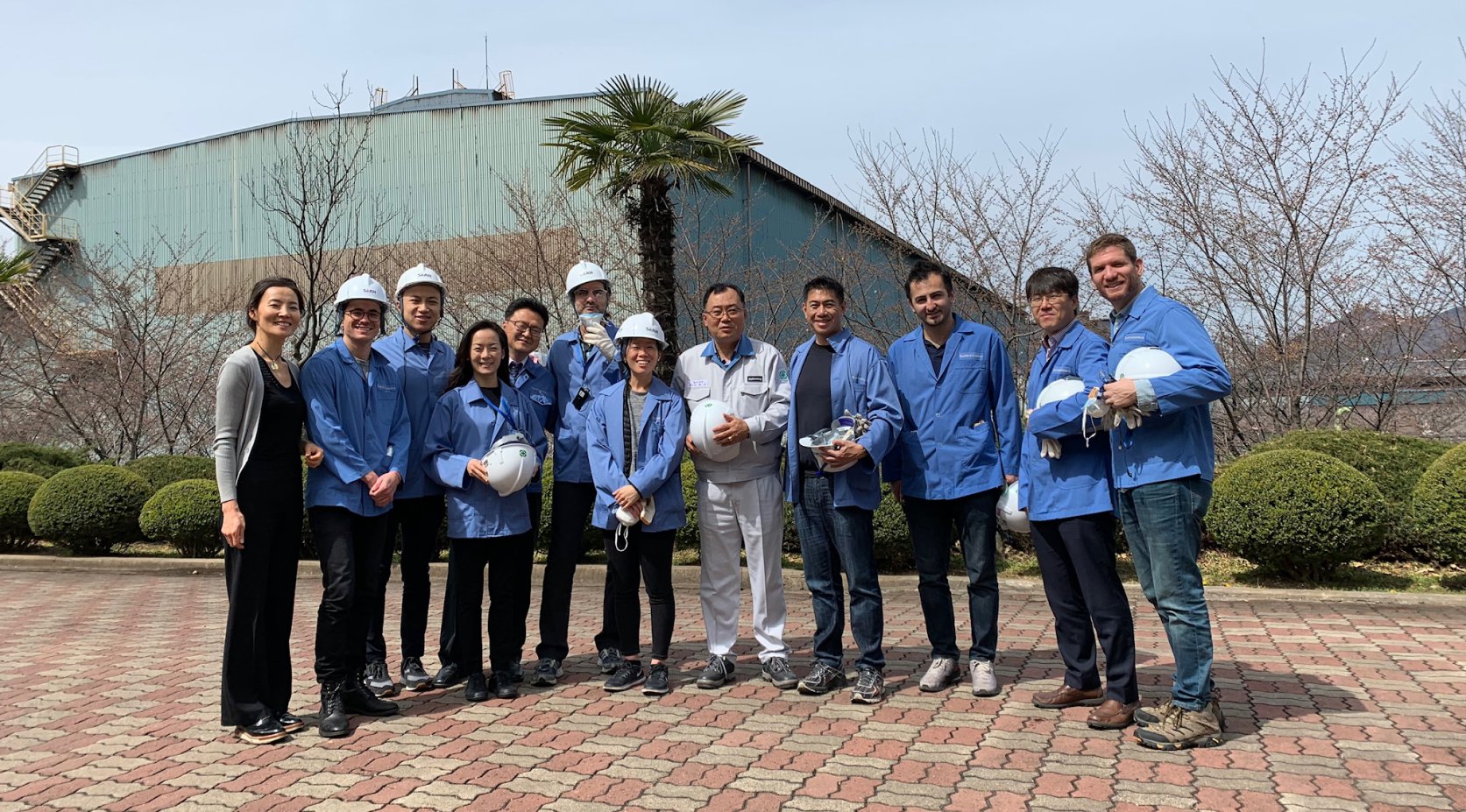
SeAH sent 15 executives to BCG Digital Ventures in Manhattan Beach to work alongside us for a four-month innovation process. I was one of three strategic designers on the team.
100 to 0, then 0 to 1
Every venture I build follows two moves. First narrow many options down to the best one. Then build that one into something real. On Everguard, that took 13 months.
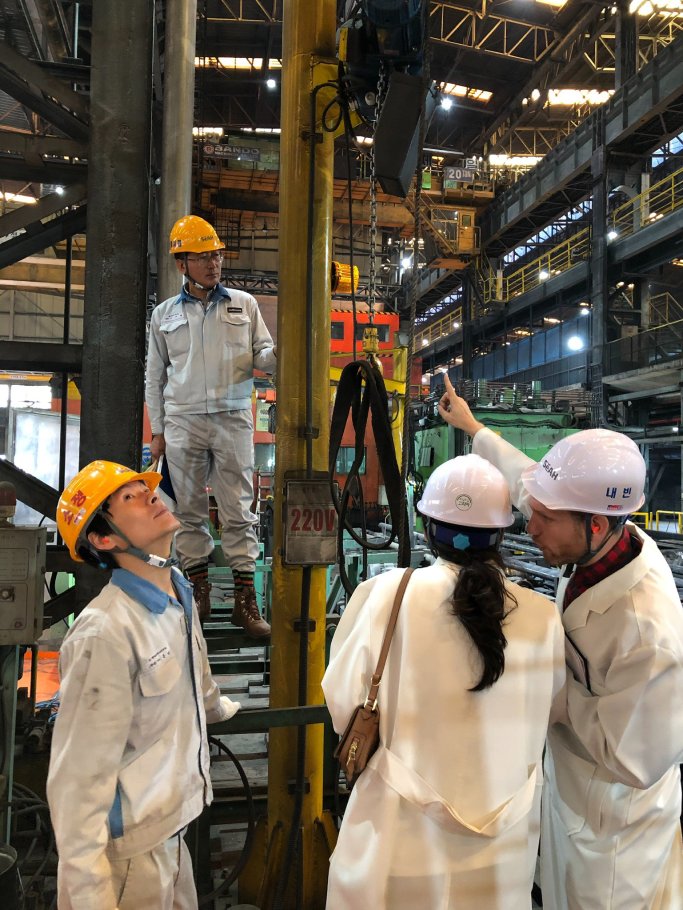
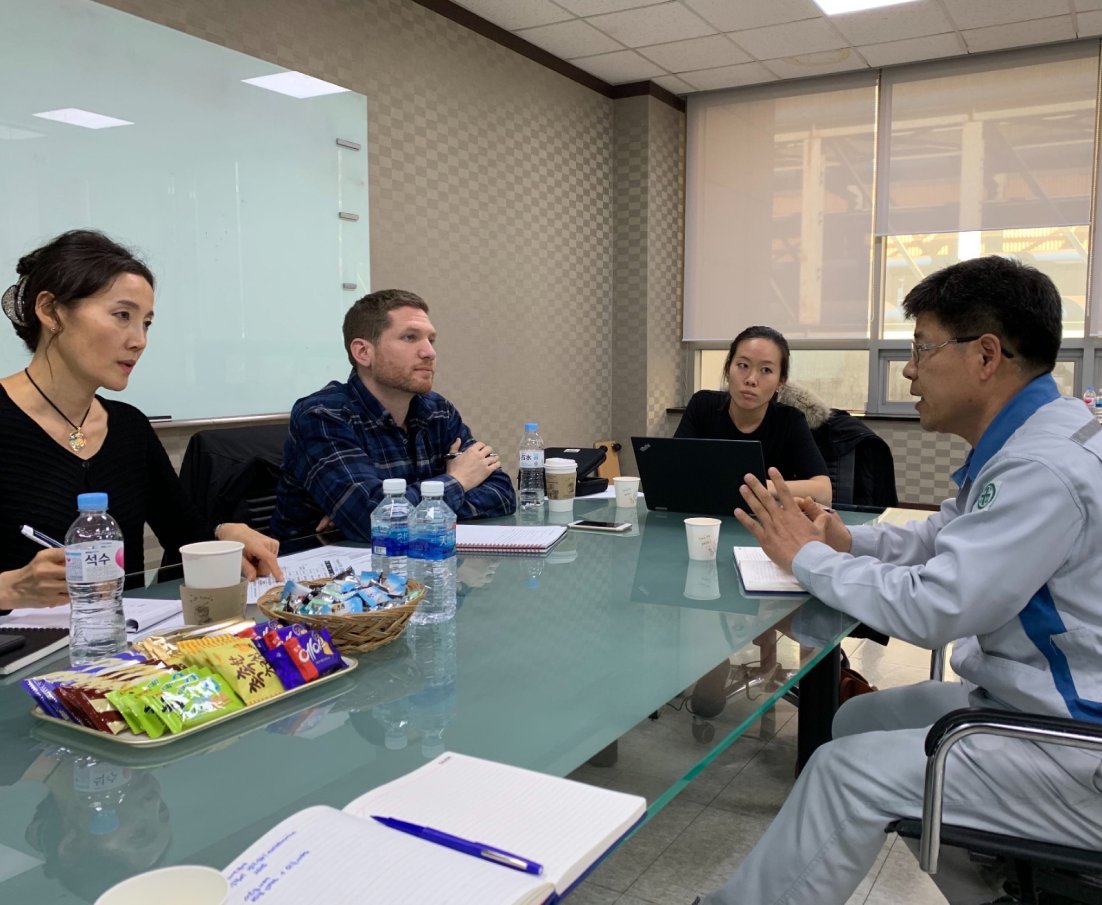
- Map the chainA value-chain analysis, then four pods did field research across suppliers and partners. Mine covered Illinois and Indiana. Others covered Korea and Asia.
- Imagine widerI led a 40-person Hack a Future workshop that turned the research into future business concepts. The client later called it their favorite part.
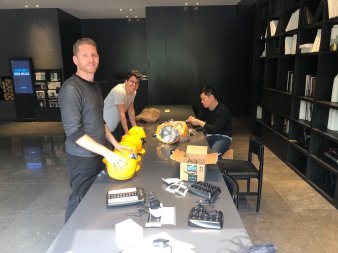
- Down-selectAbout 200 ideas became roughly 15, then five. I took a computer-vision worker-safety concept and tested a live haptic alert prototype with five construction workers.
- PitchIn Seoul, I gave the final pitch to the CEO with a live demo.
- Find the use caseWith a build team of product managers, engineers, and data scientists, we ran a use-case analysis across nine layers to find where computer vision mattered most: the highest-risk zones of the floor.
- Design with workers60 worker interviews across Seoul, Gunsan, and Busan, then participatory design with workers and their union so the product felt like it was for them, not surveillance.
- Test in the fieldAlpha and beta tests, including an on-site A/B test against strict performance metrics.
- Hand offAn executive team was hired in 2019. The company is still operating, and its framing still traces back to this work.
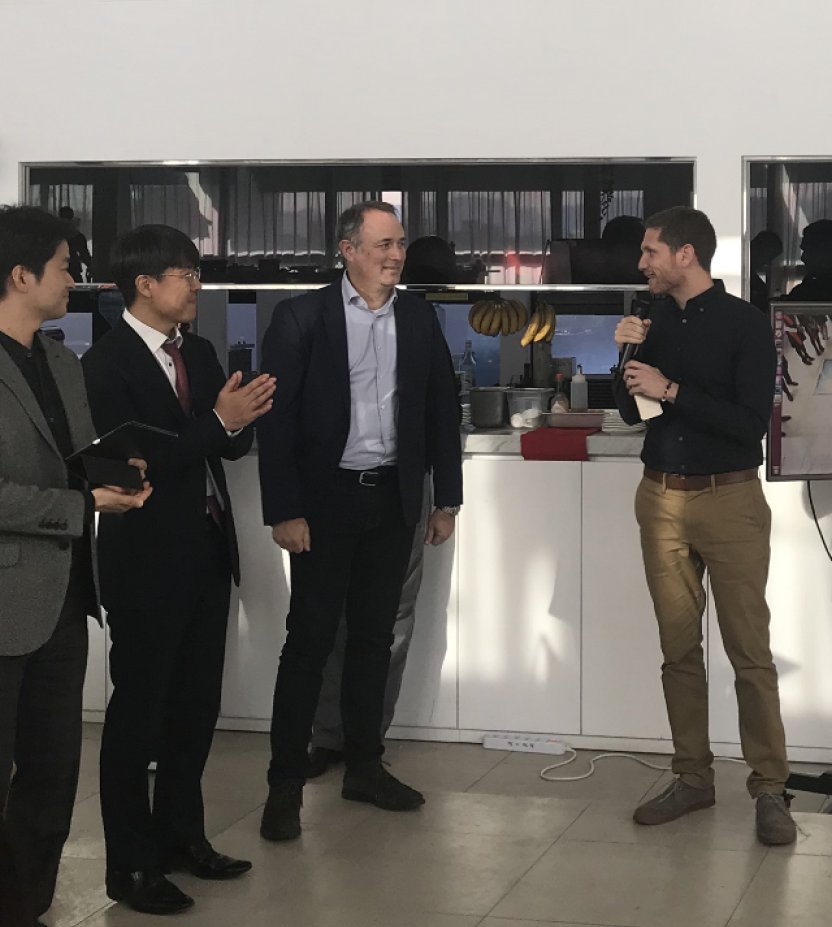
The final pitch in Seoul
We pitched five concepts to SeAH's CEO in Seoul, with a live demo of the computer-vision prototype. SeAH invested in mine with a seven-figure commitment, and it moved into incubation with a dedicated build team.
Worker input and field testing
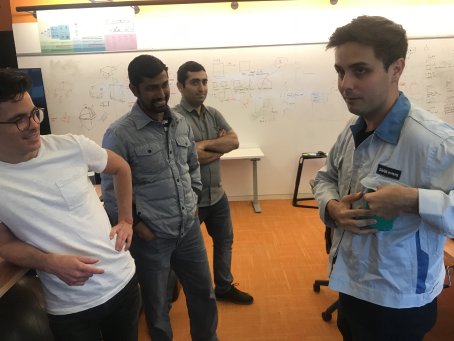
Workers in Korea proposed their own alert ideas, from lasers and drones to earbuds and sound. They voted, and a second group reviewed the results the next day. A union leader joined the sessions, and his feedback shaped the final design.
In testing, the first haptic device was built into a helmet and did not work well. We moved it into a jacket.
Designing a venture follows the same arc as architecture. You conceive what's possible, raise the money, then build. When the foundation and strategy are strong, the venture keeps standing after you leave.
Of everything I've worked on, this is the fullest end-to-end case, and the one I've watched live in market the longest.
Have a challenge or an idea?
You don't need to have everything figured out. Let's look at what you're working on and where I can help.